Blog
Women in Peace
A critically important lesson from the ’Let’s build peace, here and now’ conversations with local peacebuilders has been about the centrality of women in peacebuilding. From Serbia to Northern Ireland, local peace efforts not only involve anti-war activism, but also women coming together on issues of day-to-day concern to them – not just peace. This breaks…
‘This is where we connect’ – Jelena Memet
An emerging thread in the ‘Let’s build peace, here and now’ conversations with local peacebuilders is the transient nature of peace, the understanding that ‘peace, not conflict, is episodic.’ In order to unpack this further we spoke to Serbian peacebuilders Jelena Memet, Anita Pantelić and Galina Maksimović who talked about the ways in which ‘war’…
The politics of peace and remembering – Anita Pantelić
An emerging thread in the ‘Let’s build peace here and now’ conversations with local peacebuilders is the transient nature of peace, the understanding that ‘peace, not conflict, is episodic.’ In order to unpack this further, we spoke to Serbian peacebuilders Jelena Memet, Anita Pantelić and Galina Maksimović who talked about the ways in which ‘war’…
War by other means – Galina Maksimović
An emerging thread in the ‘Let’s build peace here and now’ conversations with local peacebuilders is the transient nature of peace, the understanding that ‘peace, not conflict, is episodic.’ In order to unpack this further, we spoke to Serbian peacebuilders Jelena Memet, Anita Pantelić and Galina Maksimović who talked about the ways in which ‘war’…
Resources
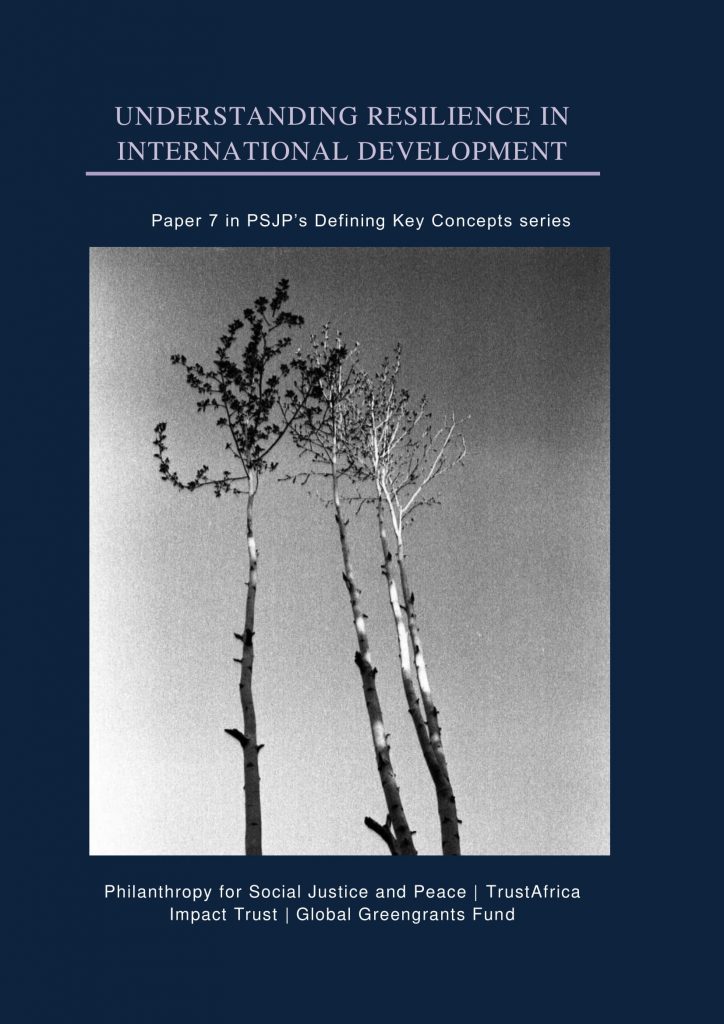
Understanding Resilience in International Development
In the discourse of development and philanthropy, the term resilience is used across the spectrum between two poles. In some contexts, resilience means weathering the transition to change (such as for the three case studies mentioned above), while in others it is used to protect the structural frames of the status quo and so to absolve the state and other actors of responsibility. In this paper, we explore this paradox. The goal is to develop an understanding of resilience in development and philanthropy so that it can be applied more meaningfully in our work.
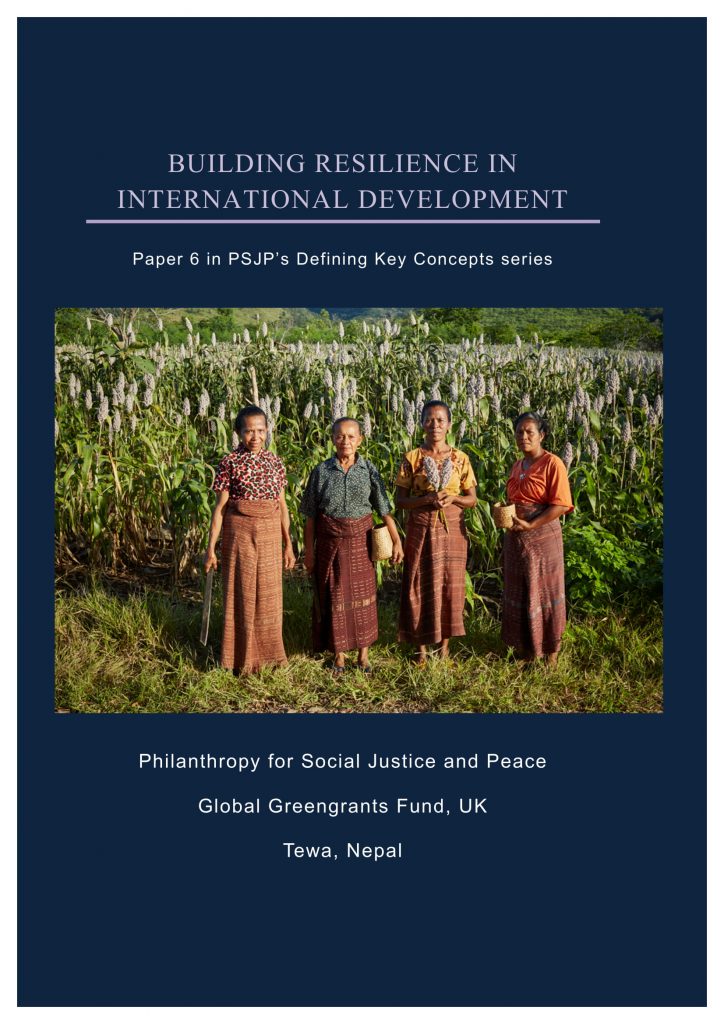
Building resilience in international development
This paper considers what resilience looks like in practice. It is based on the work of three organizations – Tewa, Global Greengrants Fund and Harvard Humanitarian Initiative. It is far from a complete account of resilience and that more work is needed. We hope that you will join us in this learning journey and share your stories.
News
Episode 5: Let’s build peace, here and now, Feb 27 2023
In the next episode of ‘Let’s build peace: here and now’ hosted by the Foundations for Peace Network, Melanie Greenberg of Humanity United will speak with Nomfundo Walaza, co-founder of Unyoke Foundation and a clinical psychologist about her work on the empowerment and the healing of victims of torture, trauma and violence; and with Colette Rausch about her work in war-affected countries around the globe at the intersection of justice, trauma, and peacebuilding.
New Episode of Let’s Build Peace, Here and Now on April 21st
Episode 4: Jelena Memet, Anita Pantelić and Galina Maksimović REGISTER HERE: https://us02web.zoom.us/meeting/register/tZ0vc-ugrTgpE9YHNczyCHFMaa2HZgbzVKka APRIL 21, 2022 at 01:00 PM UTC About this Event In previous conversations in the series speakers spoke about the transient nature of peace. ‘Peace, not conflict, is episodic.’ In the next episode of ‘Let’s build peace: here and now’ hosted…
Join our learning circle on building the ‘beloved community’
We are living in a time of unprecedented challenge – the pandemic, political polarisation, growing tribalism and nationalism, long delayed racial reckoning in parts of the world, exacerbation of gender inequities, rising poverty, gaping inequality, and the imminent climate catastrophe. As agents of change, there is much frustration that our efforts are falling short, so…
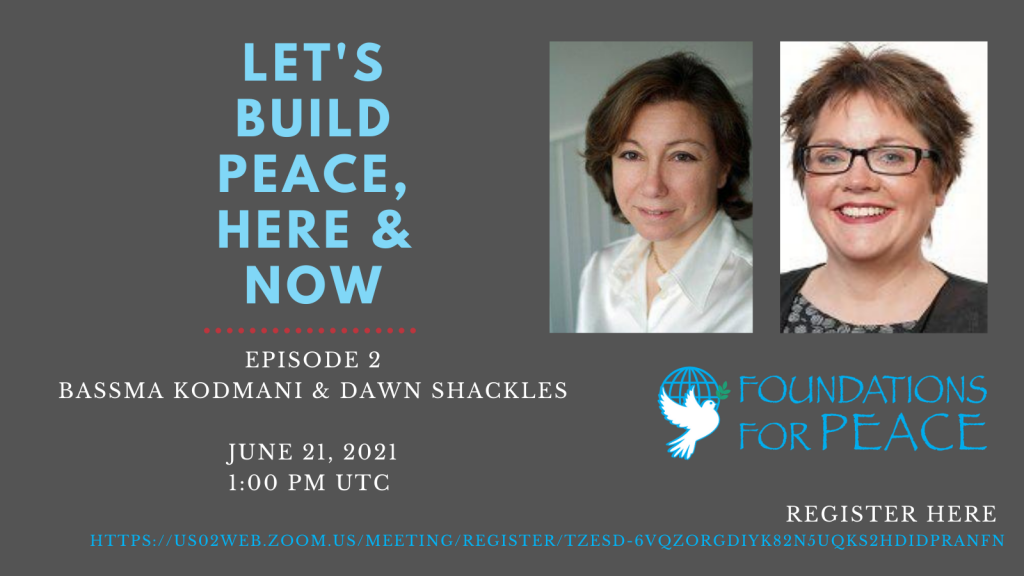
Let’s Build Peace, Here & Now Episode 2: Bassma Kodmani and Dawn Shackles
21 June 2021 9:00 AM EDT, 1:00 PM UTC, 2:00 PM BST, 3:00 PM CEST, 6:30 PM IST Register here https://us02web.zoom.us/meeting/register/tZEsd-6vqzorGdIYK82n5UQKs2hdIDPRAnfN About this Event In the second episode of ‘Let’s build peace: here and now’ conversations, Dawn Shackels, a local activist from Northern Ireland will speak with Bassma Kodmani, a fellow activist and peacebuilder who…